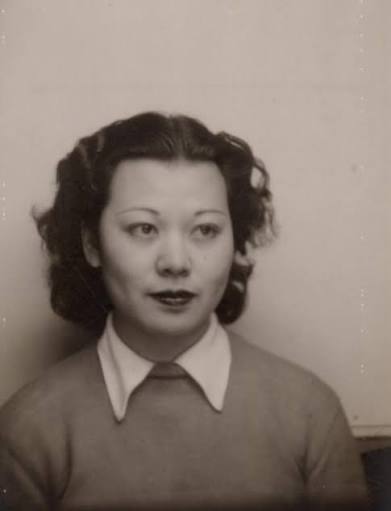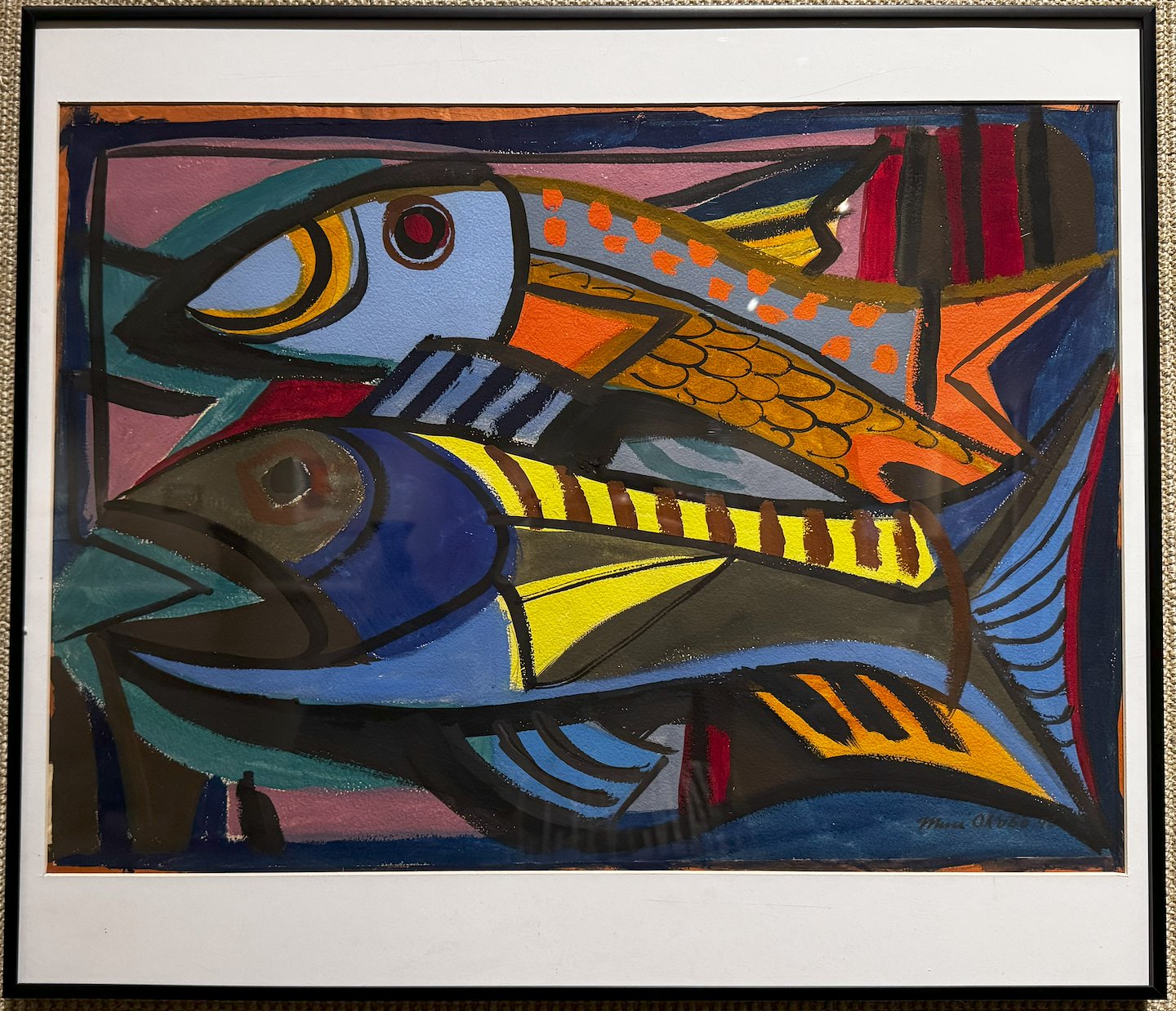
Miné Okubo (1912–2001) was an American artist and writer whose work offers a powerful window into one of the most difficult periods in American history. Through her art and writing, Okubo documented her experiences during the forced relocation and incarceration of Japanese Americans during World War II, creating an enduring record of daily life, hardship, community, and resilience.
Her career, however, began long before her experiences during the war.
Okubo earned her Master of Fine Arts degree from the University of California, Berkeley, in 1938. That same year, she received the Bertha Taussig Memorial Traveling Fellowship, which provided her with the opportunity to spend two years traveling throughout Italy and France.
During her time in Europe, Okubo studied under renowned modernist artist Fernand Léger, an experience that helped shape her artistic development. Rising tensions across Europe, however, forced her to end the fellowship six months early.
After returning to the United States, Okubo continued to establish herself as an artist. From 1939 to 1942, she was commissioned by the Federal Art Project to create murals and mosaics. One of these projects gave her the opportunity to collaborate with Mexican muralist Diego Rivera in San Francisco.
Okubo was building a promising career as an artist when the United States entered World War II—and her life changed dramatically.
Following the United States' entry into World War II, approximately 120,000 Japanese Americans were forcibly relocated and incarcerated by the U.S. government.
On April 24, 1942, Okubo and her brother, Toku, were relocated to the Tanforan Assembly Center in California. Like thousands of other Japanese Americans, they were forced to leave behind their homes, possessions, routines, and communities and adjust to life in a temporary detention facility.
Life at Tanforan was a stark contrast to the world Okubo had known. Daily life included twice-daily roll calls, curfews, harsh weather, and crowded barracks.
Yet even under these circumstances, Okubo continued to use her artistic abilities to build community.
She co-founded the Tanforan Art School, where she taught both children and senior citizens. Art became not only a means of creative expression, but also a way to provide connection and purpose in an environment defined by uncertainty.
Six months after arriving at Tanforan, Okubo and her brother were relocated once again—this time to the Topaz Relocation Center in Utah.
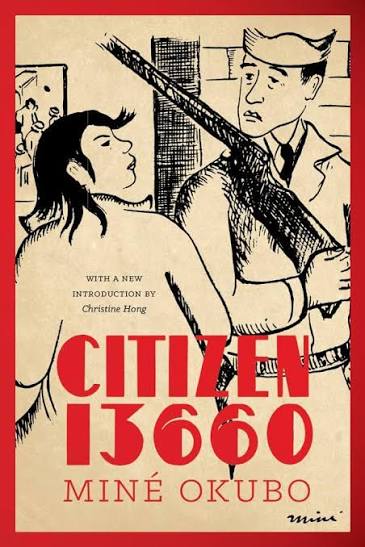
At Topaz, Okubo continued to find ways to create and contribute to the community around her.
She founded the Topaz Art School and became involved in literary and journalistic projects, co-founding, illustrating, and editing the Topaz Times and the literary magazine Trek.
But Okubo's artistic work went beyond teaching and community-building.
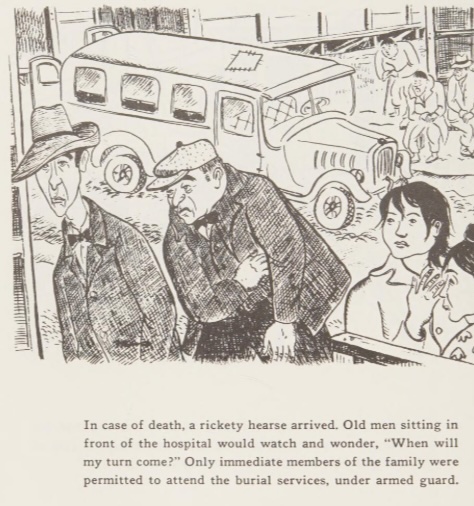
She began creating drawings that documented the reality of life inside the relocation center. Rather than simply recording events, her sketches captured the emotional and human experience of incarceration—the drama, humiliation, frustration, hardship, and everyday struggles faced by Okubo and her fellow internees.
Her drawings became a visual record of an experience that could easily have been reduced to statistics and dates.
Through her eyes, viewers could see the realities of everyday life: people waiting, working, living in cramped conditions, navigating restrictions, and attempting to maintain a sense of normalcy despite circumstances imposed upon them.
After her release from the camp in 1943, Okubo compiled many of her drawings and experiences into a groundbreaking book, Citizen 13660.
The title refers to the identification number assigned to Okubo during her incarceration. Rather than allowing that number to define her, Okubo used it as the title of a work that restored individuality and humanity to the people whose experiences she documented.
Citizen 13660 was the first published internee account after the war. Through hundreds of illustrations and accompanying text, Okubo presented a firsthand account of the forced relocation and incarceration of Japanese Americans.
The book eventually received the American Book Award in 1984, decades after its original publication, cementing its significance as both a work of art and an important historical document.
Okubo's story demonstrates the unique role art can play in preserving history.
Photographs, government records, newspaper articles, and official documents can tell us what happened. But Okubo's drawings help communicate what it was like to live through those events.
Her work documents more than the physical conditions of incarceration. It captures human behavior, relationships, routines, emotions, and moments of everyday life. Her artistic perspective allows viewers to engage with history on a deeply personal level.
At the same time, Okubo's story is one of remarkable resilience. Even after being forcibly removed from her home and confined because of her Japanese American heritage, she continued to teach, create, write, and contribute to her community.
She transformed her experience into art—and that art continues to educate audiences generations later.
Miné Okubo's work reminds us that museums are not simply places to look at beautiful objects. They are places where we encounter stories, perspectives, and experiences that help us better understand the past and ourselves.
Her art challenges us to consider whose stories are recorded, whose voices are heard, and how artists can help preserve moments in history that must never be forgotten.
Through Citizen 13660 and her broader body of work, Okubo ensured that the experiences of Japanese Americans during World War II would not be remembered solely through statistics or official accounts. She gave those experiences a human face.
Miné Okubo was an artist, a writer, a teacher, and a witness to history. Her work continues to remind us of the power of art to document, to challenge, and to remember.
Visit the Evansville Museum of Arts, History & Science to explore the stories behind the artwork in our collection and discover how artists have helped shape our understanding of American history.