In 1816, Indiana entered the Union as a free state that prohibited slavery. Despite being a free state, many African American individuals in Indiana and throughout the United States faced discrimination and brutality even after the Civil War and the Reconstruction Period established their foundational rights. In 1903, Evansville saw tensions rise through a race riot, which left lasting impacts on the city.
The 1903 Evansville Race Riot was caused by larger systemic issues of Jim Crow laws, as seen through the lynchings of Black individuals by White mobs. One such lynching was in Rockport, Indiana, in which a White mob lynched two Black men in 1900 and where John Tinsley, also known as Lee Brown, was driven out of the area. Tinsley then settled in Evansville and worked seasonally as a street improver. Lynchings, like the one that occurred in Rockport, caused migration throughout this time as Black men and women feared White mobs and their capabilities to kill and injure individuals within the Black community and damage their property.
The riot, which began on July 5th, 1903, was spurred by an incident that occurred two days prior. On July 3rd, Tinsley decided to visit Ossenberg’s Saloon and Grocery, located in Baptistown, for a beer. After his drink, Tinsley refused to pay the nickel he owed to a Black bartender, Tom Berry. Berry protested, urging Tinsley to give him payment, to which Tinsley threatened to come back and “fix” Berry.[1] After this, Berry informed the local White patrolman on duty, Lewis N. Massey, about the incident.
Upon Tinsley’s return to the bar, Massey approached him from behind and grabbed his shoulder. Startled, Tinsley turned around while firing a revolver, thereby shooting Massey. Massey returned fire, injuring Tinsley in the chest. Tinsley was subsequently arrested, questioned, and his wound was dressed. Massey, however, was taken to Deaconess Hospital, where an unsuccessful operation was performed to remove the bullet. On July 4th, Massey died from his injury, causing outrage in the community, as a Black man had killed a White police officer.
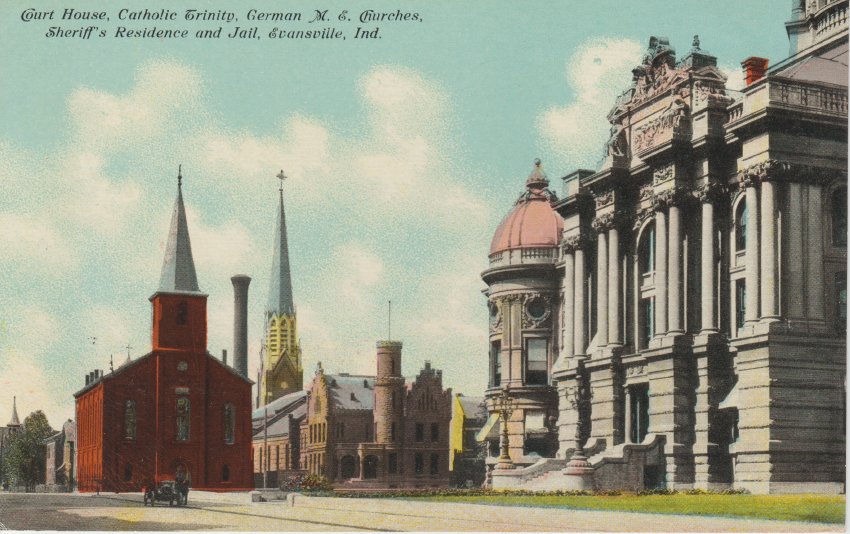
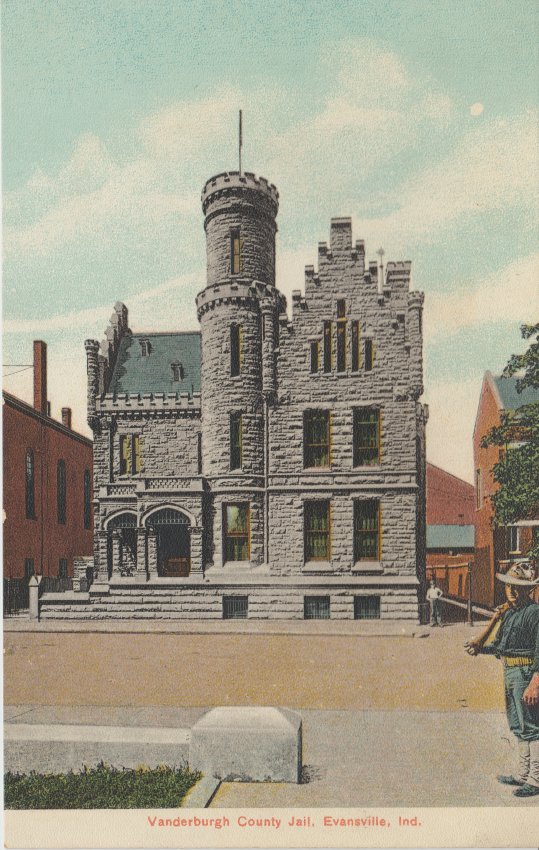
Because of Massey’s death, Sheriff Christian Kratz and Police Captain George L. Covey secretly moved Tinsley from the Vanderburgh County jail, today known as the Old Vanderburgh County Jail, to Knox County Jail and later to Jeffersonville Reformatory to protect him from White mobs, which were already forming by July 5th. A mob of more than 100 people attempted to break into the jail and take Tinsley into their custody by making a battering ram from a telephone pole to bash in the door. Although they were unsuccessful in entering the jail, they damaged some property.
Other Black individuals were targeted throughout the city, being shot at, beaten and experiencing property damage. In return, some Black citizens began to fire back. The situation grew so large that Governor Winfield Durbin ordered martial law to be in effect and called the Indiana militia to Evansville to keep the peace. Once the militia came to the city, the situation escalated as a gunfight emerged between White Evansville residents and the militia, resulting in the death of some citizens, including a young girl. A few days later, the rioting ceased. However, many Black families left the town because of the racial tensions and trauma they experienced.
Tinsley fell ill while in custody, passing away on July 31st. Contemporary reports state that the cause of death was pneumonia, which he developed while escaping the threats of the Evansville mob. A few of the White individuals who were involved in the shootings and the mob were identified, though few legal charges were pursued, despite the harm they caused.
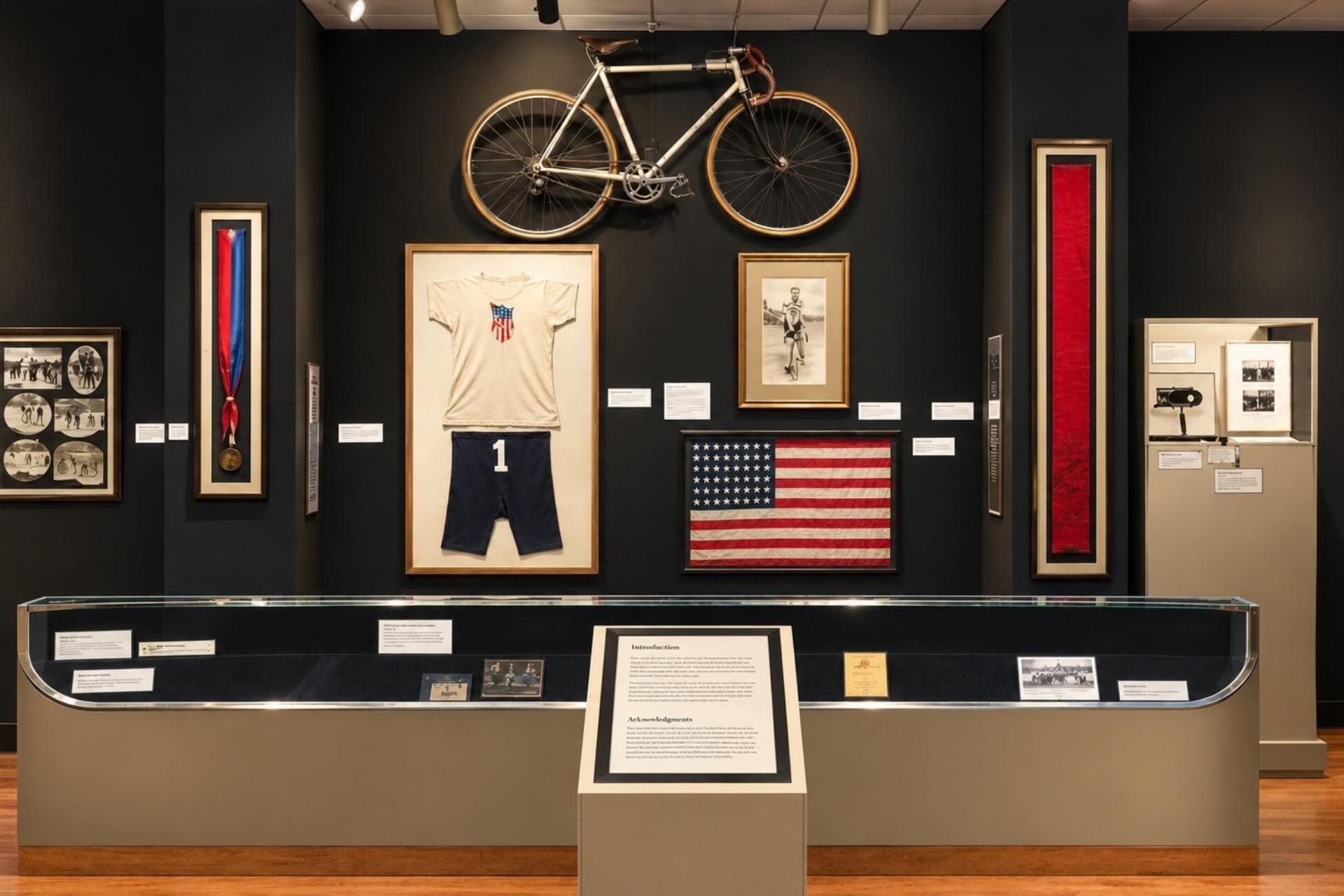
This is just one of the events that is covered in the Pieces of the Past: America at 250 Years exhibition. To learn more about local, state, and national events over the past 250 years, please visit the Evansville Museum of Arts, History & Science.
[1] Negro’s Bullet Plows Through Body of Patrolman Massey.” The Evansville Courier. July 4, 1903. NewsBank Inc., 1.
Primary:
“Evansville in the Hands of a Desperate Mob. Race Feeling at High Pitch; Pacific Forces at Work.” Evansville Journal-News. July 6, 1903. NewsBank Inc. 1.
“Massey’s Slayer Dies an Easy Death.” The Evansville Courier. August 1, 1903. NewsBank Inc. 3.
“Negro’s Bullet Plows Through Body of Patrolman Massey.” The Evansville Courier. July 4, 1903. NewsBank Inc. 1.
“Troops Depart for Their Homes, Leaving the City in Healthy Condition Morally.” Evansville Journal-News. July 10, 1903. NewsBank Inc. 1.
Secondary:
Webb, Jon. “Black History Month: 1903 riot and attempted lynching left 12 dead in Evansville.” Evansville Courier and Press. February 20, 2024. ProQuest. 1A – 2A.